

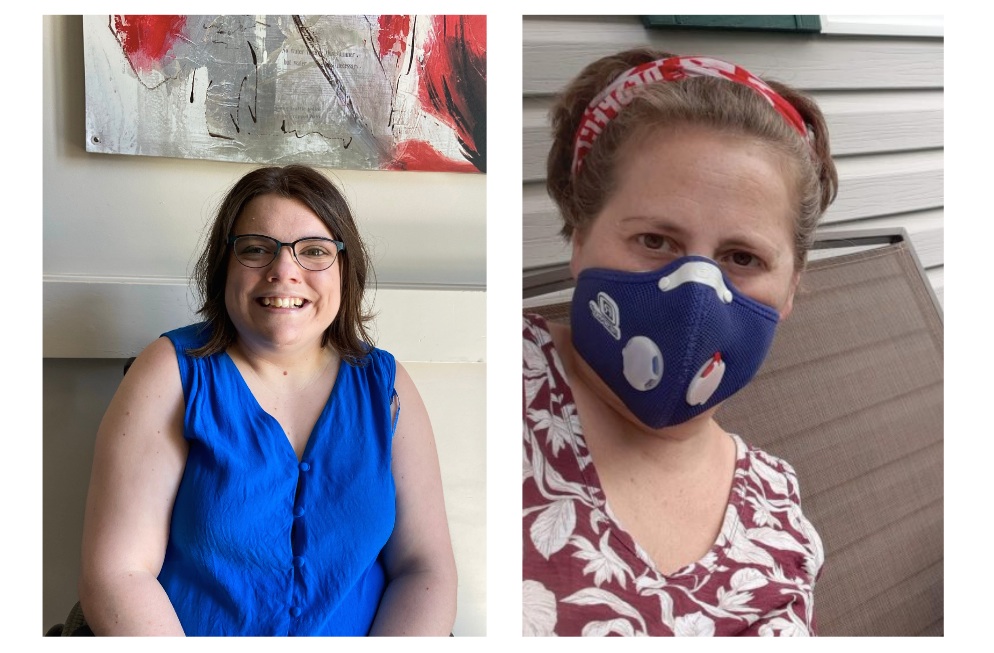
Welcome to the next edition of Kaitlyn’s disability awareness series. Today we would like to talk about something that is near and dear to our hearts, which is a visible and dangerous vicious circle caused by the “system.”
Many people with disabilities rely on social assistance for a variety of reasons. Some people cannot find a job that adequately fits their disability needs. Some people are not able to work at all because of their physical or mental health.
If you are young, with a disability, and looking to enter the workforce, you are already at a disadvantage. It is common for people entering the workforce for the first time to apply for a job in the fast food industry. If I applied there, I may be qualified on paper, but I could not physically do the job I was hired to do.
There are three limitations that prohibit people from getting off of social assistance.
First, many people with disabilities may consider entrepreneurship as their ideal career path. Having your own small business allows you to be creative, be your own boss, and work when it is convenient for you, thereby not having to answer to an employer over medical issues preventing you from working. And some find it easier to make their own schedule for a work-life balance.
A problem many people with disabilities have to face with entrepreneurship is if they rely on the system, the rules decree that you have one year to make or break your business. What this means is if you declare yourself as an entrepreneur, you have one year until you are deemed no longer eligible for social assistance. One year is a very tight timeline to make a business profitable, whether you have a disability or not. It is very difficult to make an income by the one-year mark of your business. Social assistance is not giving entrepreneurs the time it takes to see if a business is valuable or not. If the one-year mark passes by and you have to abandon the dream, the struggle to get back on social assistance with your needs being met is by no means simple to do.
The New Brunswick Department of Post-Secondary Education, Training, and Labour (PETL) is seemingly unaware of the one-year limitation placed on social assistance recipients by their own government. When talking to many within PETL, they realize we need many years to create self-employment, but the social assistance system is not created to allow that to happen. The exemptions and limitations lists created by social assistance on what tools/equipment we can keep or must liquidate (sometimes after six months, other times 12 months) is again working against us and making it impossible to seek self-employment to live a better and financially stable life.
Another concern or limitation that affects the ability to be gainfully employed for persons with disabilities are clawbacks. You can earn an extra $500 on top of your income without having to worry about any deductions. After the first $500, you get penalized or clawed back at the rate of 50 per cent for the next $500. In other words, if you work enough hours to earn $1,000, you are only getting the benefit of $750. When one hits the $750 earned, which still only has you at a max of $1,555, you risk having other benefits withdrawn that may be crucial to living and working with a disability. The system is not conducive to working if you are a person with a disability.
Thirdly, many employers may see hiring someone with a disability as a risk they’re not willing to take. An applicant may be extremely qualified for the job, yet the employer may not be willing to take a risk on them due to their disability. If you think about it from an employer perspective, they may be thinking what will hiring a person with disability cost my business? Do the pros outweigh the cons? Are they more likely to require time off due to their disability? Will my insurance rates go up due to the liability of having hired somebody with a disability? It is rare, unless for specialized office positions, or large government incentives, that most employers will consider hiring an eligible, able and willing person with a disability to work for them.
As you can see, simply “getting a job” is not easy for a person with a disability. The system is not set up to allow most to work. Many of us could work part-time, if not full-time and fill many of the vacancies, but first the system must change. We encourage you to contact your MLAs and MPs and request more inclusive programs for persons with disabilities.
Kaitlyn Layden is a disability rights advocate in New Brunswick. Shelley Petit is the chair of the New Brunswick Coalition of Persons with Disabilities.