• “I can’t believe I get to live in a place like this”: Deborah Carr
  • “Our rural roads are dangerous”: Cheryl Johnson
  • “Scarlet flowers in a messy garden:” Rick Roth
  • 2021 CUPE strike
  • About
    • History
    • Join us / Rejoignez-nous
  • Archives
  • Brian Beaton Annual Prize in Journalism for Justice / Le prix annuel de journalisme Brian Beaton pour la justice
  • Calendar
  • Comment soumettre votre article
  • Contact
  • Front Page
  • Garlic and optimism by Stephanie Coburn
  • google site verification – do not delete
  • Join the Co-op / Donate
  • Local Journalism Initiative
  • Markets and inter-generational goodness by Teri McMackin
  • Nuclear energy in New Brunswick
  • On hanging on and being hopeful: Deborah Carr
  • Our Team / Notre Équipe
  • Posts Page
  • Privacy policy
  • Share a Story
  • Subscribe/ S’abonner
  • The Brief / En Bref
  • The hills of Penobsquis by Beth Nixon
  • The NB debrief with Tobin Haley
  • Devenir membre / Faire un don
  • Donation Confirmation
  • Donation Failed
  • Donor Dashboard
NB Media Co-op
No Result
View All Result
No Result
View All Result
NB Media Co-op
No Result
View All Result
Home *Opinion*

SMNRs: New Brunswick should learn from others’ mistakes

by Hannah Moore
December 11, 2021
in *Opinion*, Environment, New Brunswick, Opinion, RAVEN
0
SMNRs: New Brunswick should learn from others’ mistakes

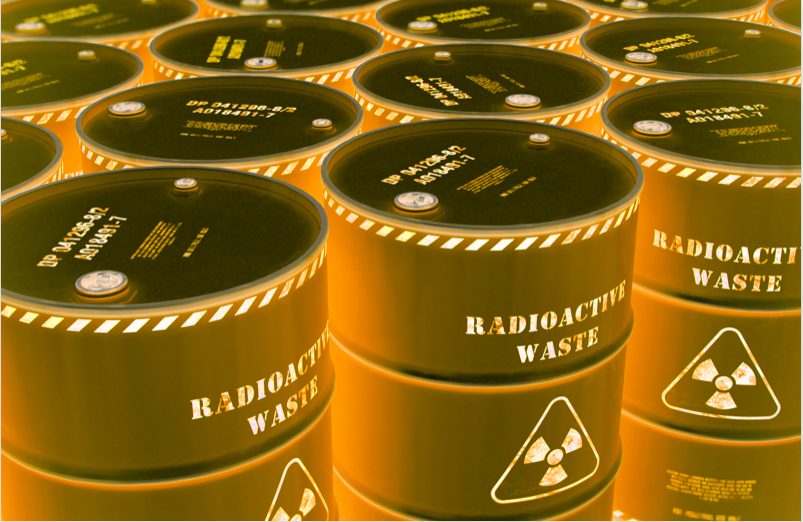
Barrels of radioactive waste, Adobe Stock photo.

43
SHARES
0
VIEWS

When it comes to nuclear energy, there is a lot of confusion about its benefits and problems. Though nuclear is often framed as a “clean” source of low-carbon energy, the dark side of the industry tends to be overlooked.

New Brunswick’s commitment to explore and develop small modular nuclear reactors (SMNRs) in the province has caused recent concern for a number of reasons. One is nuclear waste management. One of the largest challenges posed by SMNRs is safely handling the waste they produce. Due to its radioactivity and highly hazardous properties, safely managing nuclear waste has proven difficult.

When nuclear fuel is removed from a reactor, is it generally placed in a water-filled pool where the heat and radioactivity can decrease. After seven to ten years, it is then placed in dry storage containers made of reinforced concrete lined with steel, to act as a barrier against radiation.

Nuclear waste is especially difficult to ‘dispose’ of because it has a long half-life, meaning the waste continues to be radioactive and hazardous for thousands of years. If anything were to happen to these nuclear waste containers, the material inside would likely have detrimental effects. Improper disposal of nuclear waste can result in contamination, which can threaten natural environments, wildlife, drinking water, and human health.

What is concerning about Canada’s renewed interest in nuclear development is the noticeable lack of consideration for environmental and public health within the country’s nuclear safety framework. Though nuclear waste can pose serious health and safety threats, Canada still doesn’t have an approved plan for our high, intermediate, or low-level radioactive waste stockpiles, even after 50 years of nuclear energy production.

The International Atomic Energy Agency (IAEA) released a report reviewing Canada’s nuclear safety framework, highlighting a number of gaps and issues that are reason for concern. The report states that the framework fails to establish a national policy and strategy for radioactive waste management.

New Brunswick’s commitment to develop SMNRs should also raise questions and concerns about radioactive waste management. The province should consider issues faced by neighbouring nuclear plants, and evaluate whether SMNRs are worth the risk.

The community of Kincardine, Ontario, is located next to the largest nuclear plant in the province, the Bruce Power facility. While the facility has provided jobs for the community and power for the province, the hazardous issue of nuclear waste cannot be ignored. At the Bruce plant, low and intermediate level wastes are accumulating, causing concern over long-term storage. The solution to the accumulating waste is disposal in a deep geological repository, which many oppose due to the potential of leaks and environmental contamination.

New Brunswick should be paying attention to the challenges posed by nuclear waste in neighbouring provinces and address the potential dangers posed by radioactive waste.

The provincial government has committed to developing SMNR technology, and hopes to construct at the already-existing Point Lepreau Nuclear Generating Station. While the government states that SMNRs could provide jobs in New Brunswick, the technology and economic models for it are not yet well-established.

Without a confirmed design and technology, how can there be a confirmed waste management plan? Without a safe yet effective plan, nuclear development in New Brunswick is irresponsible and puts New Brunswickers and provincial ecosystems at risk.

Nuclear energy isn’t the picture-perfect, low-carbon energy source that many make it out to be. It is time for New Brunswick to consider safer and cheaper energy alternatives that are already accessible in the province.

Hannah Moore is a fourth year Environment & Society major at St. Thomas University, the leader of the STU divestment campaign, and a researcher on the RAVEN project at the University of New Brunswick.

Tags: Hannah MooreLepreaunuclearradioactivitysmall modular nuclear reactors

Recommended

No Content Available

Site Links

  • Log in
  • Entries feed
  • Comments feed
  • WordPress.org
  • “I can’t believe I get to live in a place like this”: Deborah Carr
  • “Our rural roads are dangerous”: Cheryl Johnson
  • “Scarlet flowers in a messy garden:” Rick Roth
  • 2021 CUPE strike
  • About
  • Archives
  • Brian Beaton Annual Prize in Journalism for Justice / Le prix annuel de journalisme Brian Beaton pour la justice
  • Calendar
  • Comment soumettre votre article
  • Contact
  • Front Page
  • Garlic and optimism by Stephanie Coburn
  • google site verification – do not delete
  • Join the Co-op / Donate
  • Local Journalism Initiative
  • Markets and inter-generational goodness by Teri McMackin
  • Nuclear energy in New Brunswick
  • On hanging on and being hopeful: Deborah Carr
  • Our Team / Notre Équipe
  • Posts Page
  • Privacy policy
  • Share a Story
  • Subscribe/ S’abonner
  • The Brief / En Bref
  • The hills of Penobsquis by Beth Nixon
  • The NB debrief with Tobin Haley
  • Devenir membre / Faire un don
  • Donation Confirmation
  • Donation Failed
  • Donor Dashboard

© 2026 JNews - Premium WordPress news & magazine theme by Jegtheme.

No Result
View All Result
  • “I can’t believe I get to live in a place like this”: Deborah Carr
  • “Our rural roads are dangerous”: Cheryl Johnson
  • “Scarlet flowers in a messy garden:” Rick Roth
  • 2021 CUPE strike
  • About
    • History
    • Join us / Rejoignez-nous
  • Archives
  • Brian Beaton Annual Prize in Journalism for Justice / Le prix annuel de journalisme Brian Beaton pour la justice
  • Calendar
  • Comment soumettre votre article
  • Contact
  • Front Page
  • Garlic and optimism by Stephanie Coburn
  • google site verification – do not delete
  • Join the Co-op / Donate
  • Local Journalism Initiative
  • Markets and inter-generational goodness by Teri McMackin
  • Nuclear energy in New Brunswick
  • On hanging on and being hopeful: Deborah Carr
  • Our Team / Notre Équipe
  • Posts Page
  • Privacy policy
  • Share a Story
  • Subscribe/ S’abonner
  • The Brief / En Bref
  • The hills of Penobsquis by Beth Nixon
  • The NB debrief with Tobin Haley
  • Devenir membre / Faire un don
  • Donation Confirmation
  • Donation Failed
  • Donor Dashboard

© 2026 JNews - Premium WordPress news & magazine theme by Jegtheme.

X
Did you like this article? Support the NB Media Co-op! Vous avez aimé cet article ? Soutenez la Coop Média NB !
Join/Donate