

The reduction of government revenue due to the coronavirus is already leading some provincial and municipal governments to propose austerity measures.
In doing so, they risk repeating some of the worst mistakes of the Great Depression.
That is a scary thought given that the sudden drop in employment and GDP rival the 1930s. But there is one big difference between now and then: today, we understand that in a crisis like this one, governments must increase spending to support employment and economic activity, and thereby avoid a deep and long depression.
It is surprising, therefore, that so many municipal and provincial governments in Canada have already started reaching for fiscal austerity and balanced budgets.
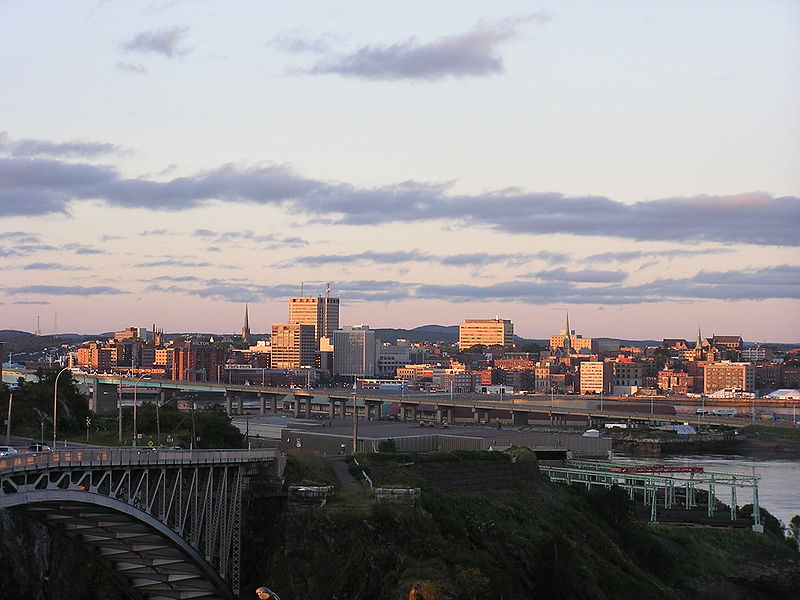
For example, Manitoba has announced cuts to wages and program spending and the municipal government in Saint John, New Brunswick will cut employment and public spending.
These decisions are a huge mistake and will make the economic consequences of what we are living through significantly worse—especially in places like Manitoba and New Brunswick.
Instead, provincial and municipal governments in Canada need extra budget room. To get it, they should lobby the federal government for debt relief.
The federal government just announced over $200 billion of major public spending in order to compensate businesses and workers for physical distancing measures that have shut down much of the country’s economic activity. The federal government is financing this spending by allowing the Bank of Canada to buy government securities to the tune of a minimum of $5 billion per week—essentially printing money.
The municipal council in Saint John can’t print Canadian dollars. It emits debentures which are bought by the government of New Brunswick and rolled into provincial bonds. There is a limited market for provincial government debt, and in light of that the Bank of Canada has stepped in with a provincial bond purchase program. But the program is capped at $50 billion, of which smaller provinces will see only a small portion. And it won’t start until May—at least 6 weeks after it was first announced.
The provincial bond purchase program needs to be a lot higher, it needs to start sooner, and provincial and municipal leaders need to be asking for it so they can make better plans.
Taking on all this debt is not going to be simple. We have been told that Canada has room because of its healthy balance sheet, but there are other structural reasons to do so as well.
First, credit is incredibly cheap right now. Long term bond yields are a little over 1%, with 10 year bond yields running only a little over 0.5%. These are well below long term averages.
They could get even lower. In fact, since the 2008 financial crisis, leading OECD countries have experimented with negative interest rates, and Canada has toyed with the idea as well. This is the new world of monetary policy, and as in the 1930s, the way out is to get creative.
After the 2008 financial crisis, governments and policymakers worried about whether similar “easy money” measures (they called it quantitative easing) would cause inflation. Though it continues to irk monetary conservatives, the issue seems mostly settled. The only assets experiencing any sustained inflationary pressure were real estate in certain cities and the art market—both of which reflect the maldistribution of wealth.
The problem we face is not inflation, but deflation—that is, falling prices.
To prevent maldistribution of wealth from turning quantitative easing into real estate inflation in Toronto and Vancouver, governments will also have to finance an economic recovery through higher levels of wealth and income redistribution—in short, relying on the same solidarity we rely on now to maintain physical distancing measures. In the 1940s, governments financed war debts by taxing high incomes at rates as high as 90%.
The threat to provinces like New Brunswick and Manitoba are the politics of debt, not the technical side of taking it on. Austerity in these provinces will accelerate some of the larger structural issues they face. In New Brunswick, they are the challenges of an ageing population and persistent out-migration.
In Manitoba, it means continued rural migration to Winnipeg and deepening poverty for vulnerable populations, especially urban Indigenous youth.
In essence, fetishizing fiscal and monetary orthodoxy was the mistake governments made in the 1930s. Similarly, the austerity measures of the last three decades have decimated our public health system and our nursing and long-term care homes.
There is a lot at stake in the economics of coronavirus. If we get this wrong, we risk impoverishing our work force and decimating our economy.
Thankfully, there are creative solutions that will minimize the pain and maximize employment.
Matthew Hayes is a sociologist and Canada Research Chair in Global and International studies at St. Thomas University. His book, Gringolandia: Lifestyle Migration under Late Capitalism (University of Minnesota Press) explores global inequality in the lives of North American migrants to Ecuador.