

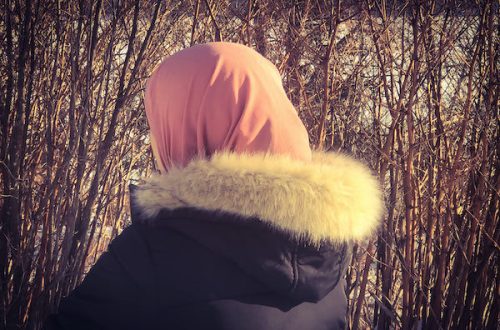
Saturday Feb. 1 was world hijab day. It was also the first official display of my handmade headscarves at the northside market. Today is another first, the opportunity to share with a wider audience my hijab story, and the experience of being a hijabi in Fredericton.
I decided to wear hijab when I was 15 years old, in 2001. I was living in Egypt with my parents. Back then, even though more than 90% of Egyptians are Muslims, and Egypt is a somewhat Islamic country, hijab was not easy. There were many challenges for anyone choosing to wear hijab.
For example, hijab was associated with being ignorant, poor and uneducated, and this prejudice often influenced how people deal with you. Also, there was no such thing as hijab fashion. You couldn’t easily find stores selling modest hijab clothes.
The situation in Fredericton today for women wearing hijab is not very different. When I arrived in Freddy last summer, I learned that many locals think any woman wearing hijab is a Syrian refugee, doesn’t speak English, and is living on government assistance, and they don’t like them for the latter.
I quickly learned to clarify that I am from Egypt when I introduce myself to people around the city to avoid any friction. I had a random guy come near me at Walmart and yell “ignorant mountain girl.” Sarcastically speaking, if I am an ignorant mountain girl (which I’m not), what is he? An astronaut?
My hijab story started when my mom used to listen to Islamic lessons in the car. Whenever I was with her we listened together, and from there I started feeling a growing urge to be more religious. I am a Muslim and I wanted to be the best Muslim I can, so I considered wearing hijab.
On the other hand, my family, with more experience in life, understood the challenges I would face if I chose to wear it. They like hijab but believed I was too young to wear it and go through all the challenges that might have come towards me as a result. Nevertheless, after a while, my mom allowed me to wear it. Many of my friends believed I would not go through with it, or I would just wear it for a while and then take it off and here I am, 19 years down the road, still wearing it.
Overall, my experience wearing a hijab in Fredericton has been OK. I met plenty of nice people around the city, I wouldn’t let some small situations here and there shape my opinion of everyone. That said, I believe wearing a hijab in New Brunswick is not the same as wearing it in other provinces and cities in Canada. I’ve heard mixed opinions about being a hijabi in Quebec. I’ve heard more positive stories from Toronto, London, and Mississauga.
What does wearing hijab mean? First and foremost, there’s nothing to be afraid of! Wearing hijab is about not only about fulfilling a religious requirement but also expressing your identity and who you are. A woman in hijab is not judgmental – or jealous – of women choosing to wear differently. A truly religious person at heart is very judgmental of their own self but not of others, or else they are not truly religious. Women don’t wear hijabs at home while with their families and female friends.
Usually being a hijabi means that you don’t drink and don’t smoke, you pray and fast and practice your religion to the best of your ability. More religious hijabis don’t shake hands with men, which sometimes means unintentionally awkward situations. Personally, this has been one of the social challenges that I don’t know how to handle without embarrassing anyone.
Going to the gym in Fredericton is not an option because all classes and gyms currently available are mixed (men and women exercising at the same time). I tried to book an all-women closed group class to exercise for me and my friends, but it was too expensive for us.
How can you support women wearing hijab? The most important thing you can do is understand what hijab is and why women choose to wear it. You don’t have to agree with it. Understanding that, and listening to and reading the stories of women wearing hijab is, in my opinion, the best thing you can do.
Sarah Taha is a Muslim Egyptian who moved to Fredericton in 2019. This story is from Sarah’s blog, I Just Got New Brunswicked!