

As part of the St. Thomas Social Work placement programme, students pair with community organizations to learn what is really going on in our community regarding poverty issues.
At the same time, it provides students with an opportunity to think about material absorbed in the classroom, including how best to confront poverty.
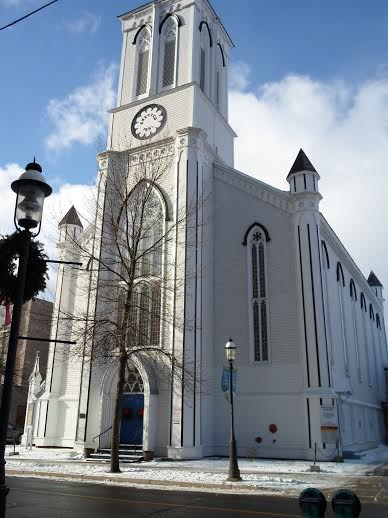
The Wilmot United Church Outreach committee provides services to people living in poverty. One long time volunteer said, “they need people to talk to them and let them know they are cared about, because most people don’t even look at them.”
She was not exaggerating. People who use the services frequently shared feelings that “people just look the other way” or “they act like you don’t exist.”
The issues facing people in poverty would be different if poverty were more commonly recognized as a human rights and social justice issue, instead of simply cause for charity or good will. It is important to encourage people and organizations to embrace this holistic way of thinking and acting on poverty issues in order to work towards deeper forms of change.
Some of the big differences between various charity and poverty reduction efforts are in how they deliver their services and how much, if any, attention they give to the structural and systemic issues that create and perpetuate poverty.
The charity model usually brings up thoughts of doing something out of the good of your own heart to help someone in need, but if these needs are truly recognized as human rights then providing for people’s basic rights is a necessary act of social justice. When charity or funding efforts are not coupled with more inclusive, cooperative and justice-oriented models, it misses the opportunity to work towards social change, and ends up being more reactionary “poverty maintenance” work than poverty reduction.
As one service user at Wilmot explained, “what some people consider ‘help’ isn’t really what the people need or want.” In addition to financial charity, he mentioned he needed help in other more significant and lasting ways.
The justice model is one in which people seek to give voice to those who are often silenced or ignored. It is about encouraging people to participate in democracy and/or social action, and helps them to find their individual and collective power and voice.
Inclusion is key to building a stronger community and helping people become part of the process of change and decision making, which in turn promotes agency, dignity and respect. As a society we need to combat the negativity, devaluing, shaming and labeling which serves to prevent people from identifying with each other or learning to work collectively.
The conversations surrounding poverty issues, the planning and the promises have been going on for a very long time. Yet, poverty persists and worsens as social services and support for anti-poverty initiatives dwindle, and the conversation circles back around with little progress. The focus remains on treating symptoms of poverty and focusing on deficiency and scarcity rather than focusing on strengths and possibilities.
There needs to be a more open discussion and true consultation between the government, the not-for-profit sector and the public. Finally there needs to be greater awareness of where the decision making power lies, whose voices are being ignored or silenced, and what mechanisms or systems are supporting and continuing these imbalances.
By sharing knowledge and resources, and by combining the charity model with a social justice approach that focuses on empowerment and self-sufficiency, we believe it is possible to create a more balanced and lasting change regarding poverty reduction.
Christa Blizzard is a recent graduate from the Social Work programme at St. Thomas University. She and her fellow group members, Jamie Frazier and Beth Anne Dolan would like to thank the Wilmot Outreach group, the volunteers and all those who shared their experiences and stories for their generosity.