

The Chronicle Herald reported on August 7th that the private bus service Acadian Lines will be shut down across the province by November 30th. The implications of this are severe as many Nova Scotians rely on the bus to travel between Nova Scotian towns.
That said, Acadian lines shutting down is good news!
I say this because Acadian Lines was providing poor service compared to what is possible in this province, and having them out of the picture creates a new opportunity for a province-wide transit strategy.
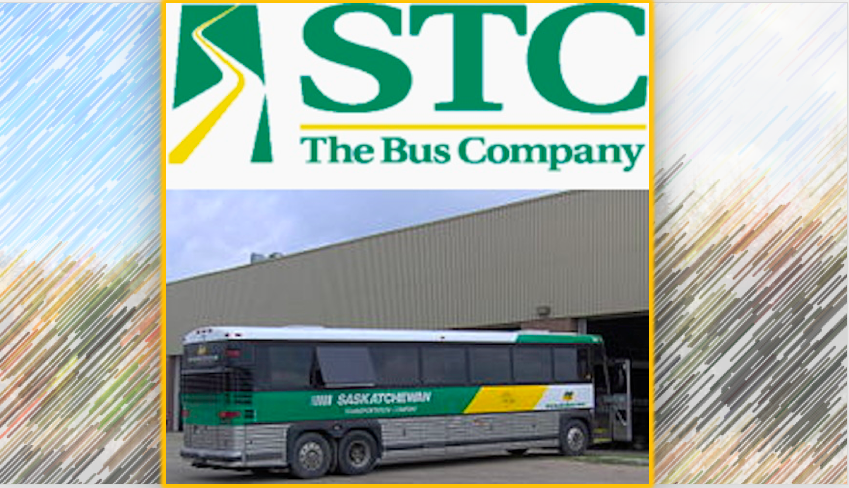
In Saskatchewan, Tommy Douglas’ CCF government set up a provincial transit corporation back in the 1940s that provides excellent services. Progressive economists with the Canadian Centre for Policy Alternatives (CCPA) have been calling for the same in Nova Scotia, and have done the research to determine the cost of starting the company up.
The Nova Scotia NDP has an excellent opportunity to solve this problem constructively, and should implement the CCPA’s recommendations. People should contact New Democrat MLAs to encourage action. This is a prime moment to put public ownership on the provincial agenda and hopefully get a victory out of this.
After reading this, contact Maurice Smith, the Minister of Transportation and Infrastructure Renewal. He can be reached at tirmin@gov.ns.ca or 424-5875.
The following is from page 73-74 of the Nova Scotia Alternative Budget, published by the Canadian Centre for Policy Alternatives. The Whole document is available here: http://www.policyalternatives.ca/nsab2012
***
Public Transportation
Transportation between rural and urban Nova Scotia is an important part of economic success and revitalizing rural communities, and economies. There are many models of public transportation around the world that Nova Scotia could draw on to explore how to innovative ways to provide vital linkages between communities. New technologies provide easier and faster ways of connecting people to ensure that we create sustainable transportation systems. As in the 2011 alternative budget, the NS Alternate Budget (NSAB) creates a new crown corporation, Transit Nova Scotia (TnS), which would have an initial mandate to provide inter-community bus transportation. Similar to what happened when Nova Scotia Power was created; the provincial government should assume control over all existing inter-community bus routes, including Kings County Transit and Acadian Lines.
Metro Transit and Transit Cape Breton should be left out of the equation as they operate in a single municipality and provide local transport, though TnS will need to enter into agreements with both municipal transit providers to connect CBRM and HRM to the new network of bus routes. TnS may also want to consider assuming responsibility for Metro Transit’s sub- urban routes connecting communities like Timberlea, Mount Uniacke, and Fall River to the urban core via routes arriving from rural areas.
Taking over Kings County Transit and Acadian Lines will provide TnS with the initial access to motor coaches, agents and experienced staff. The cost of these routes is impossible to predict. The Kings Transit Authority currently spends just over $500,000 per line (they operate 5 lines).[151] The Kings Transit Authority subsidies each route by about 60%. The cost of operating a provincial system would likely go down because of economies of scale and the introduction of higher traffic routes to the urban cen- tres. Based on these numbers and with about 20 routes, the total budget for TnS would be just above $10 million. At a provincial subsidy rate of 60% this would cost the province about $6 million per year. Some of this money would be set off by fees paid by the users of this new public transit.
The NSAB also recommends that any new services are affordable and accessible including (and especially) for people with disabilities. However, financial support (of $1 million) should also be targeted to the Community Transportation Assistance Program (CTAP). Launched in 2001 through Service Nova Scotia and Municipal Relations provincial office, the CTAP was to foster the growth and sustainability of community-based inclusive transportation services, which have grown from four to thirteen programs over that timeframe. Known as dial-a-ride or community-based transportation, the mission is to provide affordable and accessible transportation to rural Nova Scotians. This funding should be allocated as core-funding to cover the costs of key costs including program manager because current per-capita funding is not sufficient.
NSAB Actions
For 2012–13, the NSAB provides:
• An initial investment of $20 million in new spending to finance the creation of a provincial transit corporation, Transit Nova Scotia
• An annual subsidy of 25% to 60% of total operating costs — estimated at about $6 million until the service becomes established and fully accessible.
• Additional core funding to the Community Transportation Assistance Program for community-based inclusive transportation services: $1 million.
[151] Kings Transit Authority, Financial Statements, March 31, 2009.
John Hutton writes for the Halifax Media Co-op. Originally published by the Halifax Media Co-op.