• “I can’t believe I get to live in a place like this”: Deborah Carr
  • “Our rural roads are dangerous”: Cheryl Johnson
  • “Scarlet flowers in a messy garden:” Rick Roth
  • 2021 CUPE strike
  • About
    • History
    • Join us / Rejoignez-nous
  • Archives
  • Brian Beaton Annual Prize in Journalism for Justice / Le prix annuel de journalisme Brian Beaton pour la justice
  • Calendar
  • Comment soumettre votre article
  • Contact
  • Front Page
  • Garlic and optimism by Stephanie Coburn
  • google site verification – do not delete
  • Join the Co-op / Donate
  • Local Journalism Initiative
  • Markets and inter-generational goodness by Teri McMackin
  • Nuclear energy in New Brunswick
  • On hanging on and being hopeful: Deborah Carr
  • Our Team / Notre Équipe
  • Posts Page
  • Privacy policy
  • Share a Story
  • Subscribe/ S’abonner
  • The Brief / En Bref
  • The hills of Penobsquis by Beth Nixon
  • The NB debrief with Tobin Haley
  • Devenir membre / Faire un don
  • Donation Confirmation
  • Donation Failed
  • Donor Dashboard
NB Media Co-op
No Result
View All Result
No Result
View All Result
NB Media Co-op
No Result
View All Result
Home Indigenous

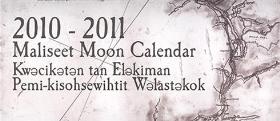
Maliseet Moon Calendar for 2011 now available

by STU Campus News
January 21, 2011
in Indigenous, New Brunswick
0
2010-2011-moon-calendar
0
SHARES
0
VIEWS

2010-2011-moon-calendar

This second Maliseet Moon Calendar recalls the traditional means by which Maliseets and most Indigenous Peoples around the world reckoned time.

It is based on the fact that there are actually thirteen moons in every year. Each moon begins on the new moon, and the first moon of the year always ends on the shortest day of the year (December 21). The remaining twelve moons are generally named according to activities or characteristics unique to each particular moon.

To facilitate reading this calendar, we have color-coded the days of each month in the usual 12 month Gregorian calendar with which most people are familiar.

The images for each moon in this calendar have been chosen to illustrate some of the oldest versions of a Maliseet origin story describing the coming of Kalowaskap, the great hero of Wabanaki peoples, to the St. John River and to the Maliseets, the People of the St. John River. The story describes the origin of many important features of the river demonstrating Maliseet familiarity with the St. John, from its mouth to the St. Lawrence River. This story also demonstrates that while other
peoples such as Passamaquoddy, Penobscots, Mi’kmaq, and various European peoples have come to our river over time, only Maliseets can claim to be the original inhabitants of the St. John. To all other claimants we might ask, in the words of J. Edward Chamberlin, “If this is your land, where are your stories?”

The story texts included here were collected from the different storytellers, Gabe Acquin (1811-1901) and his son-in-law, James Paul (ca. 1850-1913) of the Maliseet community at St. Mary’s, near Fredericton, and Jack Solomon of Kingsclear. Those by Gabe Acquin were collected by Edward Jack about 1890, while those by James Paul and Jack Solomon were collected by William Hubbs Mechling about 1910. As such they are some of the oldest recorded origin stories of the St. John River.

To order your 2010 Maliseet Moon Calendar please return the card in the attached .pdf with a cheque or money order to:

St. Thomas University
51 Dineen Drive
Fredericton, NB
E3B 5G3

You may also call the Native Studies Department at 506-452-0637.

Attachments:

  • Maliseet Moon Calendar Description and Order Form-1[1].pdf

Recommended

No Content Available

Site Links

  • Log in
  • Entries feed
  • Comments feed
  • WordPress.org
  • “I can’t believe I get to live in a place like this”: Deborah Carr
  • “Our rural roads are dangerous”: Cheryl Johnson
  • “Scarlet flowers in a messy garden:” Rick Roth
  • 2021 CUPE strike
  • About
  • Archives
  • Brian Beaton Annual Prize in Journalism for Justice / Le prix annuel de journalisme Brian Beaton pour la justice
  • Calendar
  • Comment soumettre votre article
  • Contact
  • Front Page
  • Garlic and optimism by Stephanie Coburn
  • google site verification – do not delete
  • Join the Co-op / Donate
  • Local Journalism Initiative
  • Markets and inter-generational goodness by Teri McMackin
  • Nuclear energy in New Brunswick
  • On hanging on and being hopeful: Deborah Carr
  • Our Team / Notre Équipe
  • Posts Page
  • Privacy policy
  • Share a Story
  • Subscribe/ S’abonner
  • The Brief / En Bref
  • The hills of Penobsquis by Beth Nixon
  • The NB debrief with Tobin Haley
  • Devenir membre / Faire un don
  • Donation Confirmation
  • Donation Failed
  • Donor Dashboard

© 2026 JNews - Premium WordPress news & magazine theme by Jegtheme.

No Result
View All Result
  • “I can’t believe I get to live in a place like this”: Deborah Carr
  • “Our rural roads are dangerous”: Cheryl Johnson
  • “Scarlet flowers in a messy garden:” Rick Roth
  • 2021 CUPE strike
  • About
    • History
    • Join us / Rejoignez-nous
  • Archives
  • Brian Beaton Annual Prize in Journalism for Justice / Le prix annuel de journalisme Brian Beaton pour la justice
  • Calendar
  • Comment soumettre votre article
  • Contact
  • Front Page
  • Garlic and optimism by Stephanie Coburn
  • google site verification – do not delete
  • Join the Co-op / Donate
  • Local Journalism Initiative
  • Markets and inter-generational goodness by Teri McMackin
  • Nuclear energy in New Brunswick
  • On hanging on and being hopeful: Deborah Carr
  • Our Team / Notre Équipe
  • Posts Page
  • Privacy policy
  • Share a Story
  • Subscribe/ S’abonner
  • The Brief / En Bref
  • The hills of Penobsquis by Beth Nixon
  • The NB debrief with Tobin Haley
  • Devenir membre / Faire un don
  • Donation Confirmation
  • Donation Failed
  • Donor Dashboard

© 2026 JNews - Premium WordPress news & magazine theme by Jegtheme.

X
Did you like this article? Support the NB Media Co-op! Vous avez aimé cet article ? Soutenez la Coop Média NB !
Join/Donate