• “I can’t believe I get to live in a place like this”: Deborah Carr
  • “Our rural roads are dangerous”: Cheryl Johnson
  • “Scarlet flowers in a messy garden:” Rick Roth
  • 2021 CUPE strike
  • About
    • History
    • Join us / Rejoignez-nous
  • Archives
  • Brian Beaton Annual Prize in Journalism for Justice / Le prix annuel de journalisme Brian Beaton pour la justice
  • Calendar
  • Comment soumettre votre article
  • Contact
  • Front Page
  • Garlic and optimism by Stephanie Coburn
  • google site verification – do not delete
  • Join the Co-op / Donate
  • Local Journalism Initiative
  • Markets and inter-generational goodness by Teri McMackin
  • Nuclear energy in New Brunswick
  • On hanging on and being hopeful: Deborah Carr
  • Our Team / Notre Équipe
  • Posts Page
  • Privacy policy
  • Share a Story
  • Subscribe/ S’abonner
  • The Brief / En Bref
  • The hills of Penobsquis by Beth Nixon
  • The NB debrief with Tobin Haley
  • Devenir membre / Faire un don
  • Donation Confirmation
  • Donation Failed
  • Donor Dashboard
NB Media Co-op
No Result
View All Result
No Result
View All Result
NB Media Co-op
No Result
View All Result
Home *Opinion*

Common Front for Social Justice applauds minimum wage hike, argues more needs to be done

by Common Front for Social Justice
April 3, 2020
in *Opinion*, Economy, New Brunswick, Opinion
0
Common Front for Social Justice applauds minimum wage hike, argues more needs to be done

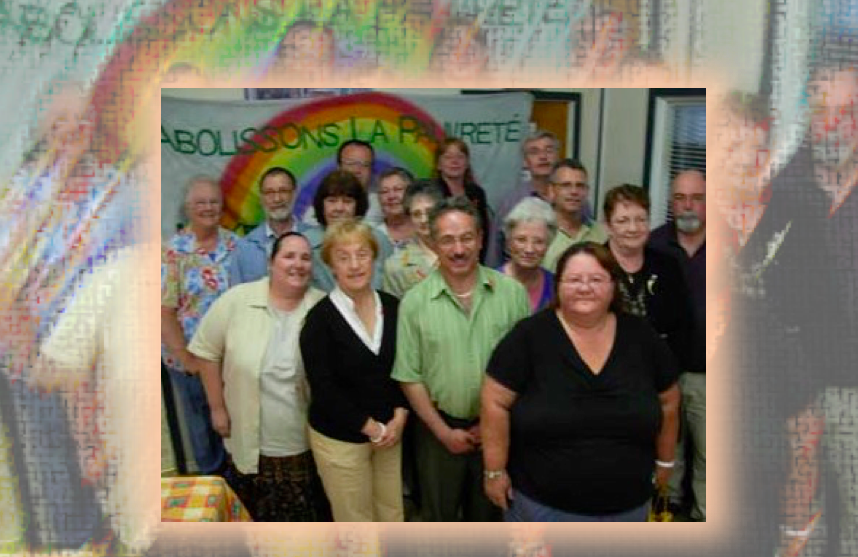
Provincial council, NB Common Front for Social Justice.

0
SHARES
0
VIEWS

The Province of New Brunswick has announced a proposed increase of the minimum wage from the current $8.25/hour to $10/hour by September 2011. According to the government, the four set incremental increases would put the minimum wage at the anticipated average for the Atlantic region.

The Common Front for Social Justice (CFSJ) celebrates this decision as a victory for the more than 100,000 New Brunswickers living in poverty today, but insists that there is still much to be done to reduce poverty in the province.

“It will have a positive impact – it can’t do otherwise – but the reality is that we currently have the lowest minimum wage after British Columbia, and will remain amongst the lowest in the country despite the increase, even in Atlantic Canada,” explained CFSJ coordinator Jean-Claude Basque. “The government always says we should be leaders in the country in health, education, the economy, but when it comes to minimum wage they say we only need to be at the Atlantic average,” said Basque.

When adjusted for inflation, minimum wage in New Brunswick has been in constant decline since the mid-seventies. Today, the province’s minimum wage is worth over 20% less than it did three decades ago. An immediate increase to $10/hour would still put minimum wage under its 1976 value.

Basque argues that minimum wage needs to keep increasing to a livable wage and then be pegged to inflation. This would assure that the purchasing power of minimum wage earners would be maintained.

Poverty is not a new issue for the Common Front for Social Justice. Most recently, the group has been keeping a close eye on the New Brunswick Economic and Social Inclusion Plan and have just published a report analyzing it, outlining its main problems and suggesting new paths for action.

They conclude that a large number of poverty-stricken New Brunswickers are left behind by the Economic and Social Inclusion Plan, including most social assistance recipients. “For the last two years, the government has increased the basic social assistance rate, but canceled that augmentation this year. So people on social assistance are more poor than they were last year,” said Basque.

According to the report, seniors are also left behind: “There are 107,640 seniors in New Brunswick and approximately 11,733 of them (10.9%) are living below the poverty line. There is nothing in the Economic and Social Inclusion Plan to help them financially.”

The CFSJ also questioned the Economic and Social Inclusion Plan’s lack of democracy. While many of its members were active in Phase 1 – Dialogue Sessions – the public was omitted from Phases 2 and 3, in which the final decisions were made. The group also felt that the private sector had disproportionate representation, as they were placed on equal footing with government, community and low-income persons.

“The CFSJ’s view is that historically, the business sector does not have a very good record in promoting poverty reduction initiatives. One only has to remember its past stands on minimum wage, pay equity, public child care services, improvements in minimum standards, employment insurance, workers’ compensation and the private sector’s demand for lower taxes. The business sector’s vision of poverty reduction is based on the charity model, not on the social justice model,” stated the report.

While the CFSJ applauds the increase in minimum wage, they would like to see some changes in the Economic and Social Inclusion Plan. Namely, they cite the need for pay equity in the private sector, reform of the certification process for disabled persons and the need for a complete overhaul of the Social Assistance Policy Manual.

Basque feels that CFSJ’s work as an organization has been important in pushing through this minimum wage increase, but recognizes another important factor – the 2010 provincial election.

Contact the Common Front for Social Justice (fcjsnb[at]nbnet[dot]nb[dot]ca) for the complete report (available in English and French).

Tags: common front for social justiceminimum wagepovertysocial assistance

Recommended

No Content Available

Site Links

  • Log in
  • Entries feed
  • Comments feed
  • WordPress.org
  • “I can’t believe I get to live in a place like this”: Deborah Carr
  • “Our rural roads are dangerous”: Cheryl Johnson
  • “Scarlet flowers in a messy garden:” Rick Roth
  • 2021 CUPE strike
  • About
  • Archives
  • Brian Beaton Annual Prize in Journalism for Justice / Le prix annuel de journalisme Brian Beaton pour la justice
  • Calendar
  • Comment soumettre votre article
  • Contact
  • Front Page
  • Garlic and optimism by Stephanie Coburn
  • google site verification – do not delete
  • Join the Co-op / Donate
  • Local Journalism Initiative
  • Markets and inter-generational goodness by Teri McMackin
  • Nuclear energy in New Brunswick
  • On hanging on and being hopeful: Deborah Carr
  • Our Team / Notre Équipe
  • Posts Page
  • Privacy policy
  • Share a Story
  • Subscribe/ S’abonner
  • The Brief / En Bref
  • The hills of Penobsquis by Beth Nixon
  • The NB debrief with Tobin Haley
  • Devenir membre / Faire un don
  • Donation Confirmation
  • Donation Failed
  • Donor Dashboard

© 2026 JNews - Premium WordPress news & magazine theme by Jegtheme.

No Result
View All Result
  • “I can’t believe I get to live in a place like this”: Deborah Carr
  • “Our rural roads are dangerous”: Cheryl Johnson
  • “Scarlet flowers in a messy garden:” Rick Roth
  • 2021 CUPE strike
  • About
    • History
    • Join us / Rejoignez-nous
  • Archives
  • Brian Beaton Annual Prize in Journalism for Justice / Le prix annuel de journalisme Brian Beaton pour la justice
  • Calendar
  • Comment soumettre votre article
  • Contact
  • Front Page
  • Garlic and optimism by Stephanie Coburn
  • google site verification – do not delete
  • Join the Co-op / Donate
  • Local Journalism Initiative
  • Markets and inter-generational goodness by Teri McMackin
  • Nuclear energy in New Brunswick
  • On hanging on and being hopeful: Deborah Carr
  • Our Team / Notre Équipe
  • Posts Page
  • Privacy policy
  • Share a Story
  • Subscribe/ S’abonner
  • The Brief / En Bref
  • The hills of Penobsquis by Beth Nixon
  • The NB debrief with Tobin Haley
  • Devenir membre / Faire un don
  • Donation Confirmation
  • Donation Failed
  • Donor Dashboard

© 2026 JNews - Premium WordPress news & magazine theme by Jegtheme.

X
Did you like this article? Support the NB Media Co-op! Vous avez aimé cet article ? Soutenez la Coop Média NB !
Join/Donate